
watchTowr
The watchTowr platform provides Continuous Automated Red Teaming (CART) and Attack Surface Management (ASM) to help businesses discover high-impact vulnerabilities.
The watchTowr adapter enables Axonius to fetch and catalog devices, vulnerabilities, SaaS applications, and cloud-related resources, ensuring comprehensive visibility into your external attack surface and high-impact vulnerabilities.
Asset Types Fetched
This adapter fetches the following types of assets:
- Devices
- Vulnerabilities
- SaaS Applications
- Domains and URLs
- Containers
- Object Storage
- Application Resources
Before You Begin
Authentication Methods
- API Key (API Token)
Required Permissions
The API key must be associated with a user account that has permissions to access and read the Integrations and Client API sections of the watchTowr organization portal.
APIs
Axonius uses the watchTowr Platform Client API to retrieve asset data.
Note
You can find API documentation and access details within your watchTowr organization portal and through the watchTowr developer resources.
Supported From Version
This adapter is supported from Axonius version 6.0.
Connection Parameters
To connect the adapter in Axonius, provide the following parameters.
Required Parameters
-
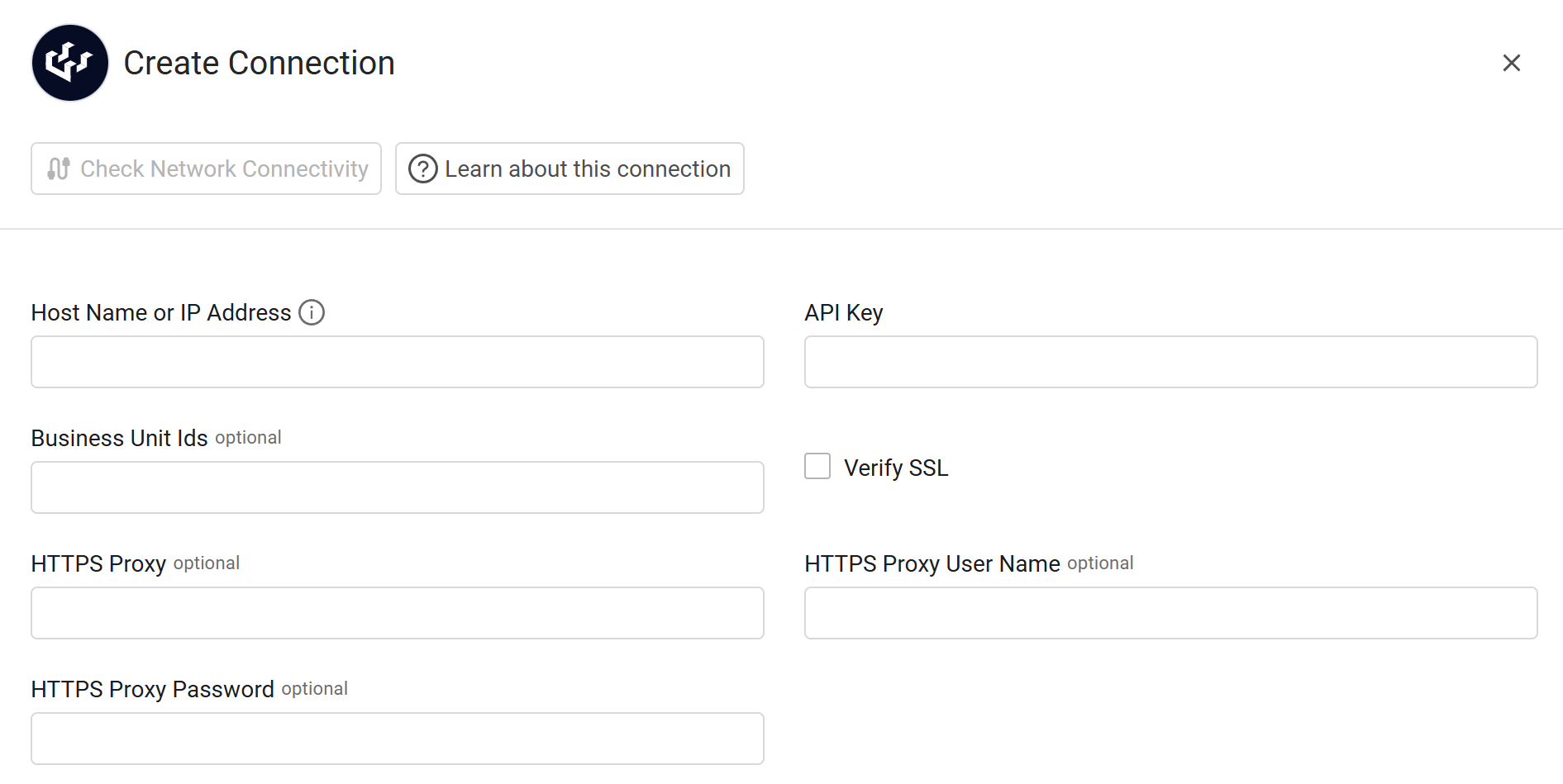
Host Name or IP Address - Enter the hostname or IP address of the watchTowr server.
-
API Key - Enter the API key associated with a user account that has permissions to fetch assets.
-
Business Unit IDs - Enter the business unit IDs from which to retrieve the data.
Optional Parameters
-
Verify SSL - Select whether to verify the SSL certificate of the server against the CA database inside of Axonius. For more details, see SSL Trust & CA Settings.
-
HTTPS Proxy - Enter an HTTPS proxy address to connect the adapter to a proxy instead of directly connecting it to the domain.
-
HTTPS Proxy User Name - Enter the user name to use when connecting to the value supplied in Host Name or IP Address via the value supplied in HTTPS Proxy.
-
HTTPS Proxy Password - Enter the password to use when connecting to the server using the HTTPS Proxy.
To learn about additional optional/common adapter connection parameters, see Adding a New Adapter Connection.
Advanced Settings
Note
- Advanced settings can apply to either all connections of this adapter, or to a specific connection. For more detailed information, see Advanced Configuration for Adapters.
- For more general information about advanced settings, see Adapter Advanced Settings.
By default, the adapter enriches users via various endpoints. Expand Global Endpoints Config and Endpoints Config to open the following settings for configurable endpoints:
Global Endpoints Config
- Multi-Processing Workers (optional, default: 1) - Enter the number of workers to use when fetching data. Increase this value to enable multi-processing and speed up fetch times. The maximum value is
20; higher values are set to20.
Endpoints Config
- Fetch URLs of sub type domain from Domains Endpoint (default: true) - By default, this adapter fetches devices of the subtype
domainfrom the Domains endpoint. Toggle off to not fetch devices of the subtypedomainfrom the Domains endpoint.- Filter Domains by Status (Default: empty) - Select one or more domain statuses to fetch. Leave this setting empty to fetch domains with all statuses.
Accepted values:Verified,Incorrect Identification,Pending,Verified Out Of Scope,Verified Reduced Attack, andParked. - Fetch Domains in the last X days (optional, default: 15) - Enter the number of days back to fetch data from the Domains endpoint.
- Enrich Domains Endpoint with Findings Endpoint (default: true) - Toggle on to enrich domain data with vulnerability information from the Findings endpoint.
- Filter Domains by Status (Default: empty) - Select one or more domain statuses to fetch. Leave this setting empty to fetch domains with all statuses.
- Fetch URLs of sub type subdomain from Subdomains Endpoint (default: true) - By default, this adapter fetches devices of the
subtypesubdomain from the Subdomains endpoint. Toggle off to not fetch devices of thesubtypesubdomain from the Subdomains endpoint.- Filter Subdomains by Status (Default: empty) - Select one or more subdomain statuses to fetch. Leave this setting empty to fetch subdomains with all statuses.
Accepted values:Verified,Incorrect Identification,Pending,Verified Out Of Scope,Verified Reduced Attack, andParked. - Fetch Subdomains in the last X days (optional, default: 15) - Enter the number of days back to fetch data from the Subdomains endpoint.
- Enrich Subdomains Endpoint with Findings Endpoint (default: true) - Toggle on to enrich subdomain data with vulnerability information from the Findings endpoint.
- Filter Subdomains by Status (Default: empty) - Select one or more subdomain statuses to fetch. Leave this setting empty to fetch subdomains with all statuses.
- Fetch ObjectStorage from Cloud Storage Endpoint (default: false) - Toggle on to fetch ObjectStorage from the Cloud Storage endpoint.
- Fetch Cloud Storage in the last X days (optional, default: 15) - Enter the number of days back to fetch Cloud Storage.
- Fetch Containers from Containers Endpoint (default: false) - Toggle on to fetch Containers from the Containers endpoint.
- Fetch Containers in the last X days (optional, default: 15) - Enter the number of days back to fetch data from the Containers endpoint.
- Fetch ApplicationResources from Repositories Endpoint (default: false) - Toggle on to fetch ApplicationResources from the Repositories endpoint.
- Fetch Repositories in the last X days (optional, default: 15) - Enter the number of days back to fetch data from the Repositories endpoint.
- Fetch Devices URLs. from IP Addresses Endpoint (default: true) - By default, this adapter fetches devices of the subtype
ip_addressfrom the IP Addresses endpoint. Toggle off to not fetch devices of the subtypeip_addressfrom the IP Addresses endpoint.- Filter IP Addresses by Status (Default: empty) - Select one or more IP address statuses to fetch. Leave this setting empty to fetch IP addresses with all statuses.
Accepted values:Verified,Tracked,Incorrect Identification,Pending,Verified Out Of Scope,Verified Reduced Attack,CDN,Hanging Cloud IP,Third Party, andVerified Honeypot. - Fetch IP Addresses in the last X days (optional, default: 15) - Enter the number of days back to fetch data from the IP Addresses endpoint.
- Enrich IP Addresses Endpoint with IP Address Ports (default: false) - Toggle on to enrich each IP address with its open ports from the IP Address Ports endpoint. This setting sends an additional request for every IP address, so enabling it can increase fetch time.
- Enrich IP Addresses Endpoint with Findings Endpoint (default: true) - Toggle on to enrich IP address data with vulnerability information from the Findings endpoint.
- Filter IP Addresses by Status (Default: empty) - Select one or more IP address statuses to fetch. Leave this setting empty to fetch IP addresses with all statuses.
Updated 2 days ago