
Cisco Application Policy Infrastructure Controller (APIC)
Cisco Application Policy Infrastructure Controller (APIC) is the main architectural component of Cisco ACI. It is the unified point of automation and management for the Cisco ACI fabric, policy enforcement, and health monitoring and optimizes performance and agility.
Types of Assets Fetched
This adapter fetches the following types of assets:
- Devices, Network/Firewall Rules
Parameters
-
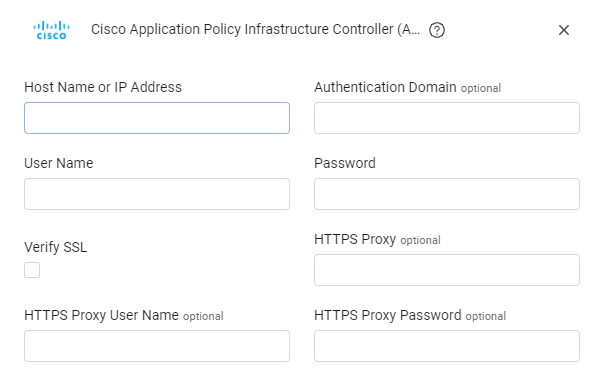
Host Name or IP Address (required) - The hostname or IP address of the Cisco APIC server.
-
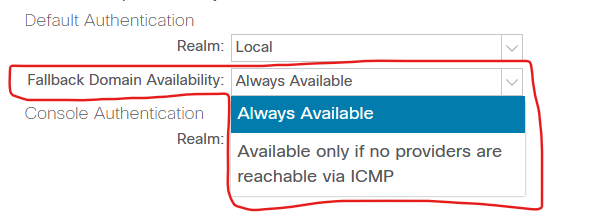
Authentication Domain (optional) - An alternative domain to be used for authentication. If empty, the DefaultAuth domain will be used. If you are authenticating with a Cisco APIC local user account, configure the Authentication Domain with the value “apic#fallback”, or the domain that is configured in the Cisco APIC web interface for local user accounts. If the connection fails with that setting, make sure that 'Fallback Domain Availability' is set to “Always Available” on the Cisco APIC web interface.
-
User Name and Password (required) - The credentials for a user account that has the Required Permissions to fetch assets.
-
Verify SSL - Select whether to verify the SSL certificate of the server against the CA database inside of Axonius. For more details, see SSL Trust & CA Settings.
-
HTTPS Proxy (optional) - Connect the adapter to a proxy instead of directly connecting it to the domain.
-
HTTPS Proxy User Name (optional) - The user name to use when connecting to the value supplied in Host Name or IP Address via the value supplied in HTTPS Proxy.
-
HTTPS Proxy Password (optional) - The password to use when connecting to the server using the HTTPS Proxy.
To learn more about common adapter connection parameters and buttons, see Adding a New Adapter Connection.
Advanced Settings
Note
Advanced settings can either apply for all connections for this adapter, or you can set different advanced settings and/or different scheduling for a specific connection, refer to Advanced Configuration for Adapters.
-
Fetch sensors - Select this option to fetch data about sensors for each device
-
Fetch contracts between EPGs as Firewall rules - Select this option to fetch ACI contracts between endpoint groups (EPGs) as Network/Firewall Rules assets. Axonius creates one asset for each contract and each consumer EPG and provider EPG pair, named
<contract>: <consumer EPG> -> <provider EPG>(asset type: Cisco APIC Contract). Default: not selected. The option is in the Cisco APIC Configuration section. Selecting this option adds 8 API calls to each fetch.Axonius fills the following standard fields: Policy Name (contract name), Firewall Name (tenant), Action (Allowed), Is Enabled, Last Modified At, Rules, and Access Ranges Allowed. Adapter-specific fields are Tenant, Contract Distinguished Name, Contract Scope, Consumer EPG Distinguished Name, Consumer EPG Name, Provider EPG Distinguished Name, Provider EPG Name, Subjects, and Filters.
EPG IP ranges come from the EPG subnets and endpoint IPs, falling back to the bridge domain subnets. Axonius skips deny filters, non-IP entries such as ARP, VRF-wide (vzAny) contracts, contract interfaces, taboo contracts, and IPv6 ranges.
Note
To learn more about Adapter Configuration tab advanced settings, see Adapter Advanced Settings.
APIs
Axonius uses the Operating Cisco Application Centric Infrastructure API
Required Ports
Axonius must be able to communicate with the value supplied in Host Name or IP Address via the following ports:
- TCP port 443
Required Permissions
APIC role-based access control is required for the value supplied in User Name: read-only, or read-write
Supported From Version
Supported from Axonius version 4.5
Updated 17 days ago